
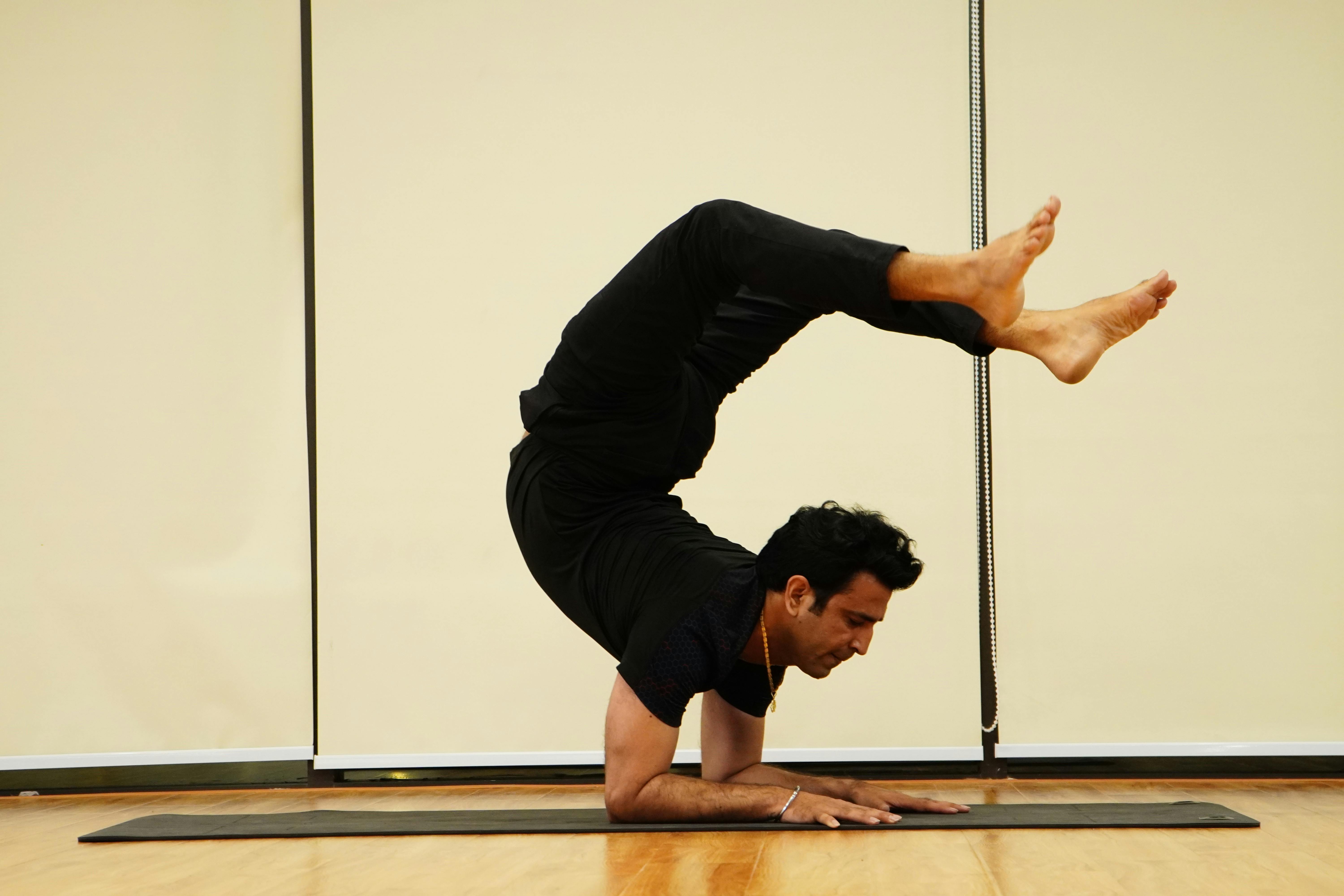
Yoga's arrival in Western countries was not a single event but a long sequence of partial transmissions. Each stage selected what its audience was prepared to accept, and the accumulated selections produced the practice now recognised globally.
The first transmissions were philosophical
Early Western interest arrived through translated texts and through Indian teachers speaking at religious and philosophical gatherings in the late nineteenth century.
What travelled first was metaphysics and ethics, presented in terms intelligible to audiences already interested in comparative religion.
Physical practice was largely absent from these accounts, and in some presentations it was actively played down as a lower concern.
Physical culture supplied the vocabulary
The early twentieth century saw widespread interest in physical training, gymnastics and health exercise across Europe, America and India alike.
The postural practice that developed during this period shared vocabulary and some technique with that movement, and its emergence in India was partly a response to it.
Which is why the physical yoga that later travelled outward was already a hybrid, and not a preserved antiquity being exported intact.
Individual teachers carried specific versions
Transmission depended on particular people travelling, teaching and writing, and each carried the emphasis of their own training.
Students in the receiving countries then taught what they had learned, so a single teacher's preferences could shape practice across an entire region.
The resulting map of styles reflects who happened to travel where rather than any systematic distribution.
Reception shaped what survived
Elements that fitted existing categories, such as exercise, relaxation and stress relief, travelled easily and were amplified.
Ethical precepts, devotional elements and the surrounding philosophical framework travelled less well, since they had no equivalent slot to occupy.
The practice that consolidated abroad was therefore weighted toward the physical and the therapeutic, which is a selection effect rather than a deliberate stripping.
The argument about it is ongoing
Practitioners and scholars in India and in the diaspora have raised the question of what is lost when a tradition is received as exercise.
Others point out that traditions have always adapted, that the postural practice was itself an adaptation, and that authenticity is a difficult standard to apply to a living practice.
Both positions are held seriously by people who know the history well, and the disagreement is better understood as an open question about transmission than as a matter with an obvious answer.