
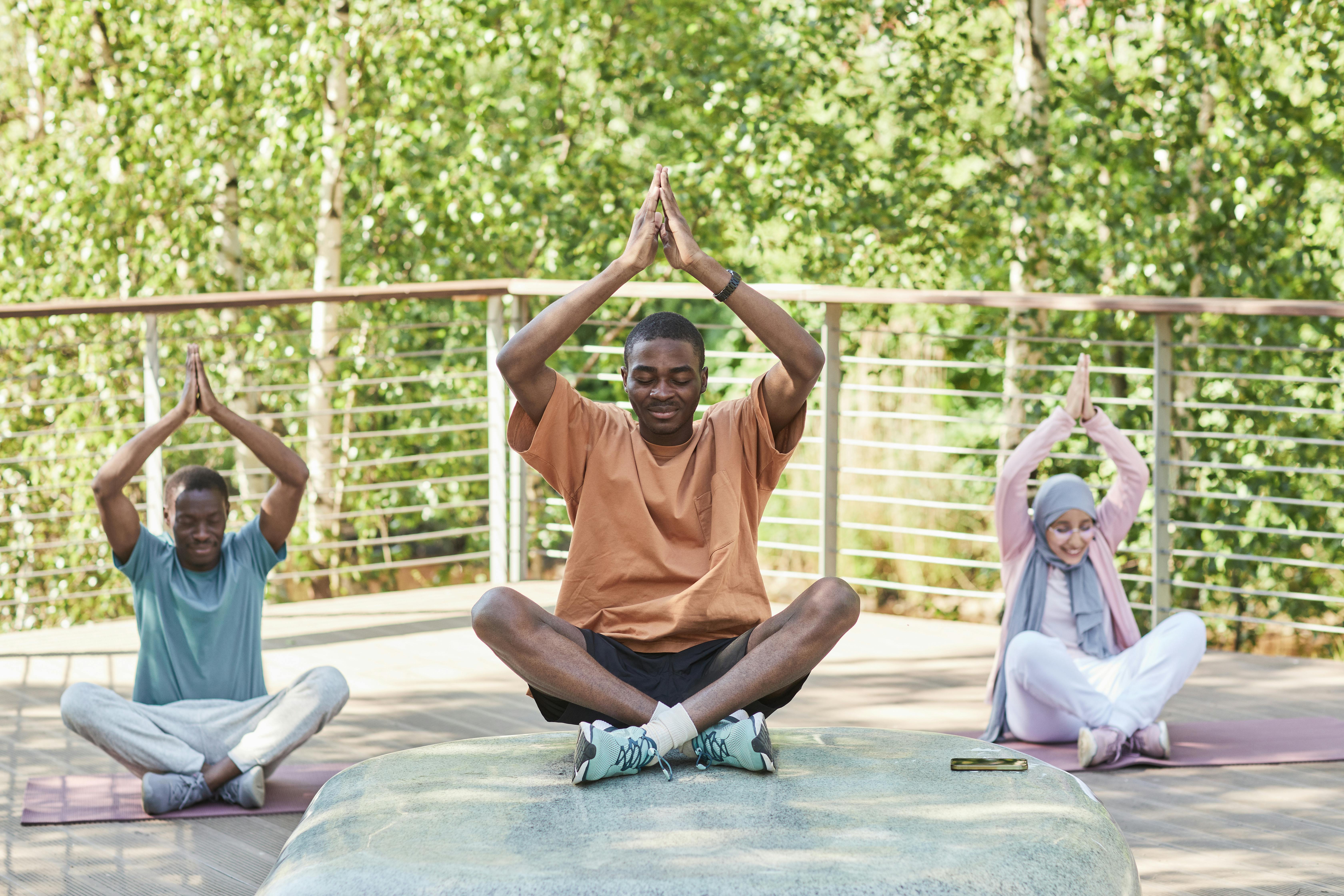
Instructions about posture are often delivered with a formality that suggests hidden meaning. The reasons are mechanical, and knowing them makes it obvious which details can be adapted and which cannot.
Posture sets the level of alertness
Body position feeds into arousal directly, which is why lying down invites sleep and standing does not, independent of how tired a person is.
Sitting upright holds a practitioner in a middle state: settled enough to stop fidgeting, alert enough that dropping into sleep requires an obvious collapse of the spine.
That collapse also acts as a signal, since a slumping posture reports drowsiness before the meditator has noticed it and gives them something to correct.
The traditional shapes are stable bases
Cross-legged sitting with the knees lower than the hips forms a tripod of two knees and the sitting bones, which is stable in every direction without muscular effort.
Kneeling positions and sitting on a chair with both feet flat achieve the same thing, distributing weight across points that do not require ongoing correction.
Stability matters because an unstable posture demands continuous small adjustments, and each adjustment is a moment of attention spent on balance rather than on practice.
Height beneath the hips does most of the work
Sitting flat on the floor tips the pelvis backwards, which rounds the lower back and puts the spine into a shape it cannot hold for long without strain.
Raising the hips above the knees with a cushion tilts the pelvis forward and lets the natural curve of the lower spine return, so the torso stacks rather than being held.
This single adjustment resolves most complaints of back pain during sitting, and it is why cushion height is the first thing an instructor checks.
Chairs are not a compromise
The cross-legged image is cultural, originating where floor sitting was the ordinary way to sit rather than a specialised skill.
A chair with feet flat, a small space between the back and the chair back, and hands resting on the thighs meets every mechanical requirement the floor positions meet.
Insisting on the floor for people whose hips and knees are not built for it produces pain, and pain is a strong competitor for attention.
Stillness and rigidity are different things
The instruction to stay still is about not responding to every itch and shift, since the impulse to move is itself useful material to observe.
Holding a position through genuine pain is a separate matter, and traditions that prize endurance have produced a fair amount of avoidable knee injury.
The workable boundary is that discomfort which changes when observed can be sat with, while sharp, localised or worsening pain means the posture should change rather than the practitioner enduring it.