
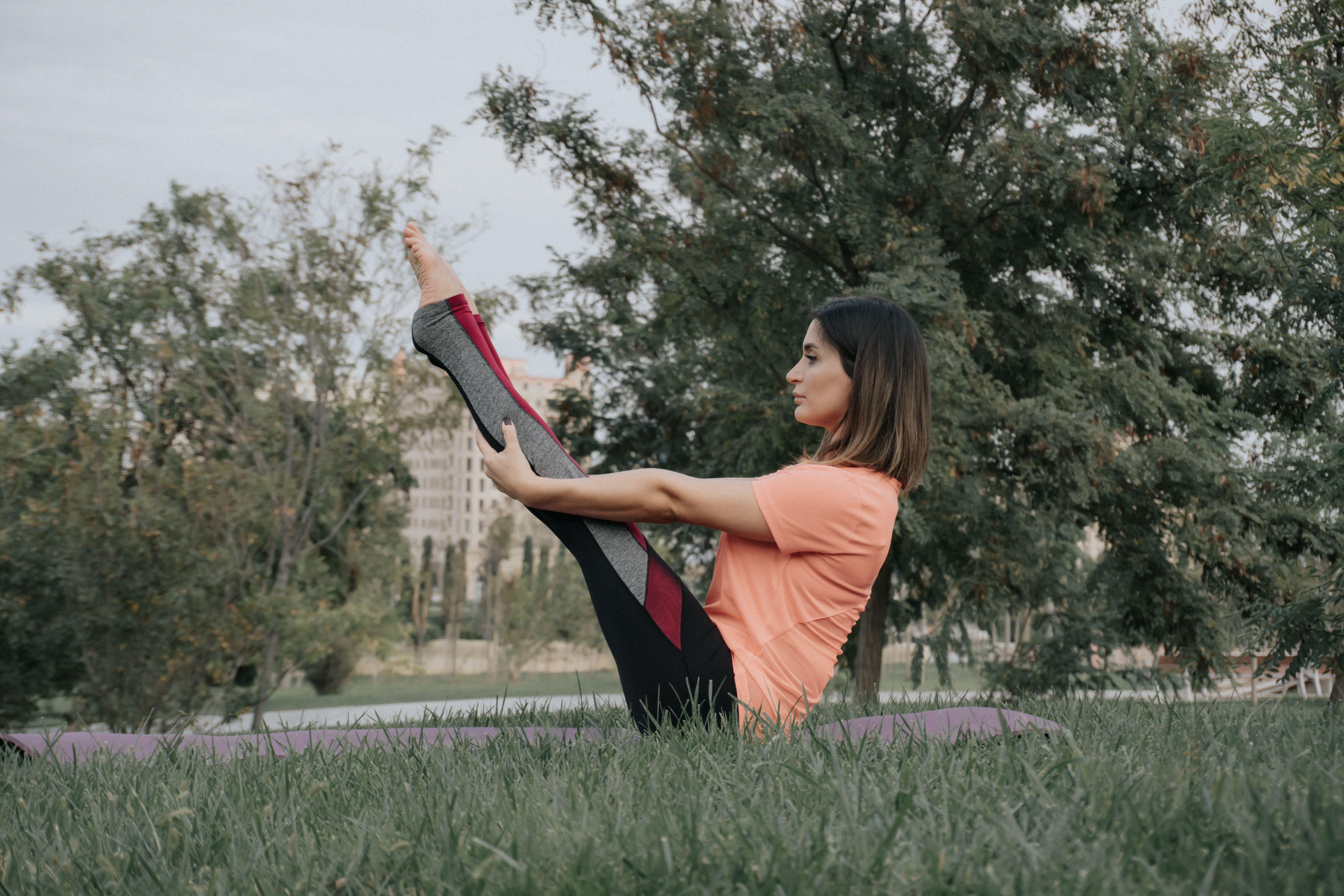
Yoga is widely understood as flexibility training, and the practice is often abandoned by people who consider themselves too stiff for it. Both the goal and the obstacle are usually misunderstood.
Range is limited by protection as much as by tissue
The point at which a stretch stops is frequently set by the nervous system's tolerance rather than by muscle or connective tissue reaching its physical limit.
Muscles resist lengthening through reflex activity, and that resistance responds to perceived threat, unfamiliarity and pain expectation.
Which is why range improves within a single session, far too quickly for tissue to have changed, and why it can regress on a day when someone is anxious or cold.
Gains are largely about tolerance
Studies of stretching consistently find that improvements in range over weeks are accompanied by increased tolerance to the sensation rather than large changes in tissue length.
Repeated exposure teaches the nervous system that the end range is safe, and the protective response relaxes accordingly.
This reframes stretching as a form of exposure and skill learning, which explains why regular short practice beats occasional aggressive practice.
Strength through range matters more than range itself
Range that cannot be controlled is of limited use and may increase injury risk, since a joint taken beyond where the muscles can act is unprotected.
Practices that load a position actively, holding shapes under muscular effort rather than hanging in them, build range and control together.
Which is why standing postures held with effort do more for usable movement than passive positions held by gravity alone.
Structure sets limits that practice cannot move
Hip socket depth and orientation, femur shape and rib cage proportions vary considerably between individuals and are not modifiable.
Two students working equally hard can therefore have permanently different maximum ranges in the same posture, and the difference is anatomical rather than a matter of effort.
Teachers who understand this instruct toward the intent of a posture rather than its appearance, which is the practical meaning of adapting the shape to the student.
What the practice is actually for
The physical practice was developed as preparation for sitting, and its historical purpose was a body that could be still and comfortable for an extended period.
Modern practice has broadened well beyond that, but strength, balance, breath control and attention remain a more accurate description of the outputs than flexibility alone.
Which is why very flexible students are often the ones a good teacher works with most carefully, since range without control is a risk rather than an achievement.