
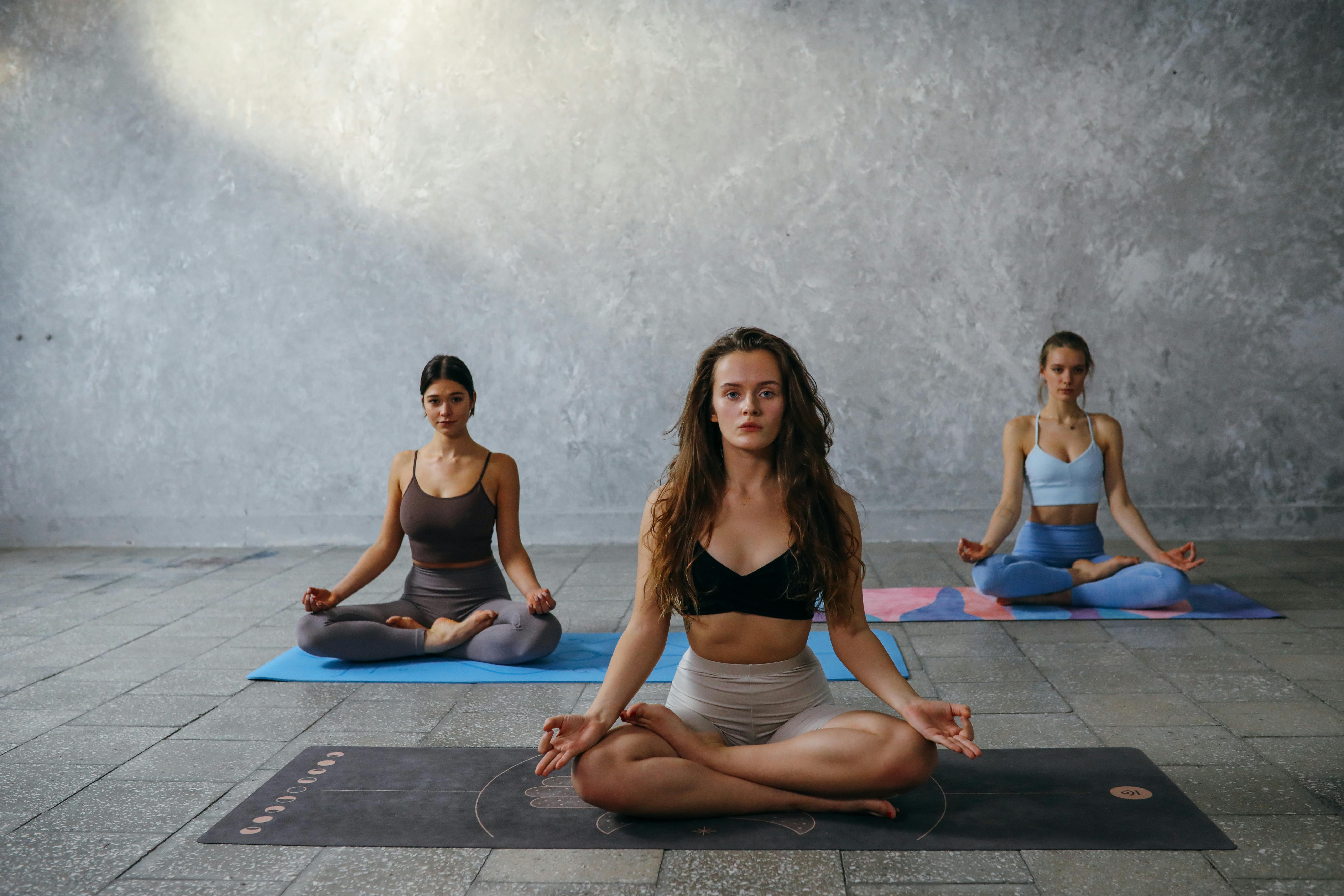
Guided recordings and silent sitting are usually presented as the same practice at different difficulty levels. They develop different capacities, and skipping the transition between them is a common reason practice stalls.
A guide holds the structure externally
A recorded voice supplies the sequence, the timing and the reminders, so the practitioner follows rather than deciding what to do next.
That removes the most common failure of early practice, which is not distraction but simply not knowing whether to continue with an instruction or move on.
It also provides recurring anchors, since a voice arriving every thirty seconds interrupts wandering before it has gone very far, which is why guided sessions feel more successful.
Silent practice makes structure internal
Without a guide, the practitioner has to hold the intention, notice drift and return, all without any external prompt at any point.
Long stretches can therefore pass unnoticed, and a first unguided session commonly ends with the realisation that most of it was planning rather than practising.
Building the internal reminder is the actual work, and it develops slowly because it can only be practised in conditions where it is repeatedly failing.
The guide can become the object
Attention naturally follows a voice, so a practitioner can complete a guided session having listened attentively without ever attending to the breath or the body the voice described.
Listening to instructions is a pleasant, absorbing activity that resembles practice closely enough that the substitution goes unnoticed for months.
Sparser guidance, with long silences between prompts, is the usual remedy, since the gaps force the practitioner to supply something themselves.
Each suits a different situation
Guided practice holds up better in difficult conditions, when a distressed or exhausted mind cannot generate structure and following a voice is achievable when sitting alone is not.
Silent practice transfers better to ordinary life, because outside a session there is no voice, and the capacity being used is the one built without support.
Experienced practitioners often keep both, using recordings for particular practices or hard periods and silence as the default, rather than treating one as a stage the other replaces.
Why apps rarely push the transition
Guided content is what a subscription delivers, and a user who has moved to unguided sitting with a plain timer needs very little from a platform.
The result is a large library of beginner and intermediate guided material and comparatively little that pushes a user toward practising without it.
Which is worth knowing when practice has plateaued after a long guided stretch, since the constraint may be the format rather than the amount of practice being done.