
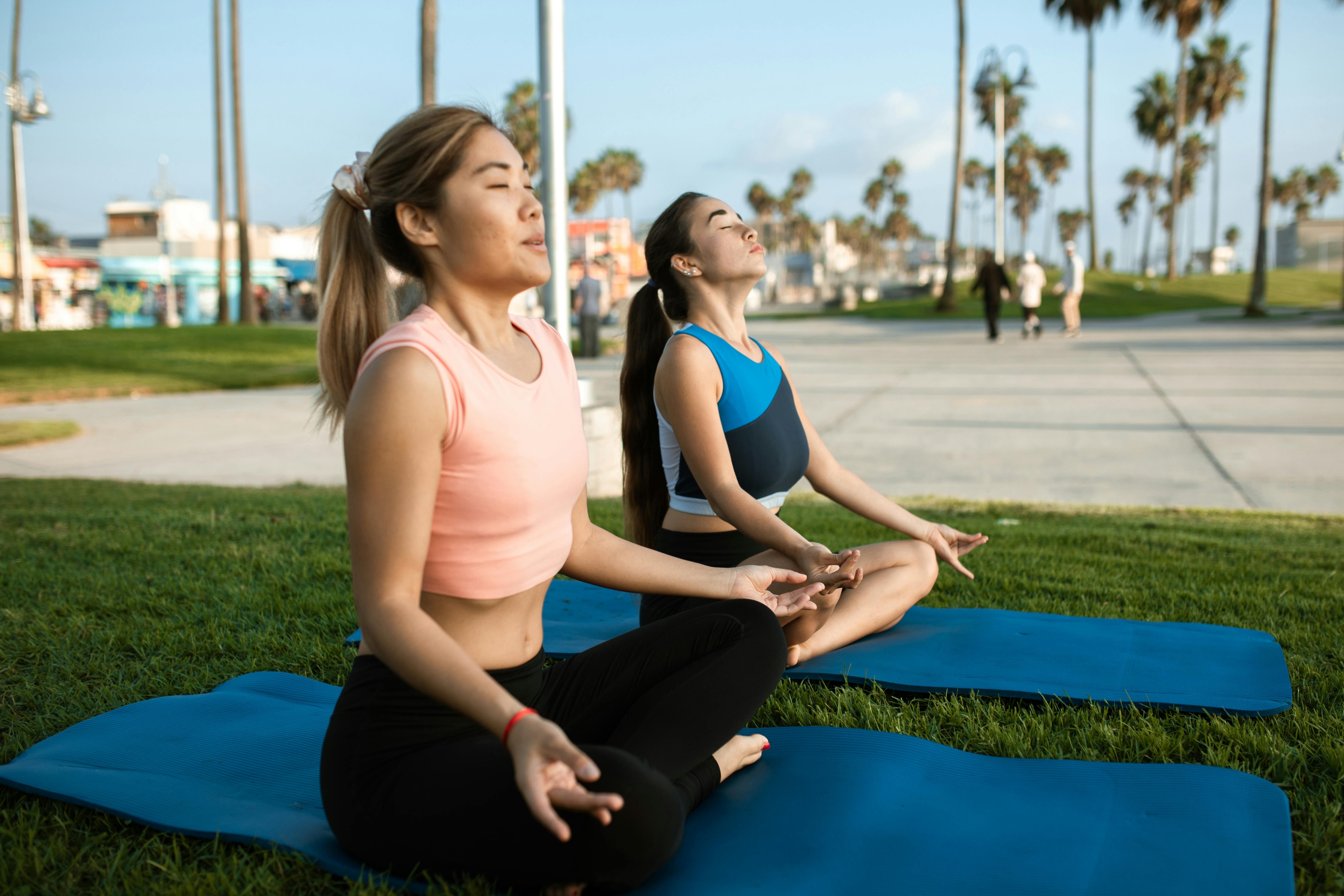
People who practice alone and in groups usually report that the two feel different. The differences are explainable without appealing to anything shared between minds.
Attendance is a commitment device
A group meets at a fixed time in a fixed place, which converts an intention into an appointment with a small social cost for skipping.
Solo practice competes with everything else in a day and can be deferred indefinitely without anyone noticing, which is the ordinary route to abandonment.
Most of the difference in total practice time between group and solo practitioners is explained by this scheduling effect alone.
Sitting length stops being negotiable
In a group the session ends when the bell sounds, removing the decision about whether to continue at each moment of discomfort or boredom.
Alone, that decision recurs constantly, and each recurrence is an opportunity to stop, so solo sessions trend shorter than intended.
The fixed endpoint also changes what happens during difficulty, since a person who cannot leave engages with restlessness rather than resolving it by standing up.
Being observed suppresses fidgeting
Practitioners in a room adjust posture less, check the time less and move less, because small movements are visible and audible to others.
This is straightforward social monitoring, the same effect that makes people work differently in a library than at a kitchen table.
Reduced movement is often experienced as deeper stillness, though the causal direction runs from the room to the stillness rather than the reverse.
Shared sound provides an anchor
A group generates a low, steady acoustic environment of breathing and occasional shifting that is predictable in a way silence is not.
Predictable ambient sound gives attention something stable to rest against, which many people find easier than an empty room where every noise is an event.
Recorded ambience does not reproduce this well, because the sounds in a room respond to the room and a recording does not.
What the group does not provide
Group settings supply structure, not supervision, and a teacher leading a room of thirty cannot track what any individual is experiencing.
Practices that surface difficult memories or intense anxiety can do so in a group as easily as alone, and the group format offers no protection against that.
Anyone for whom practice reliably produces distress should raise it with a licensed mental health professional rather than treating persistence as the answer.