
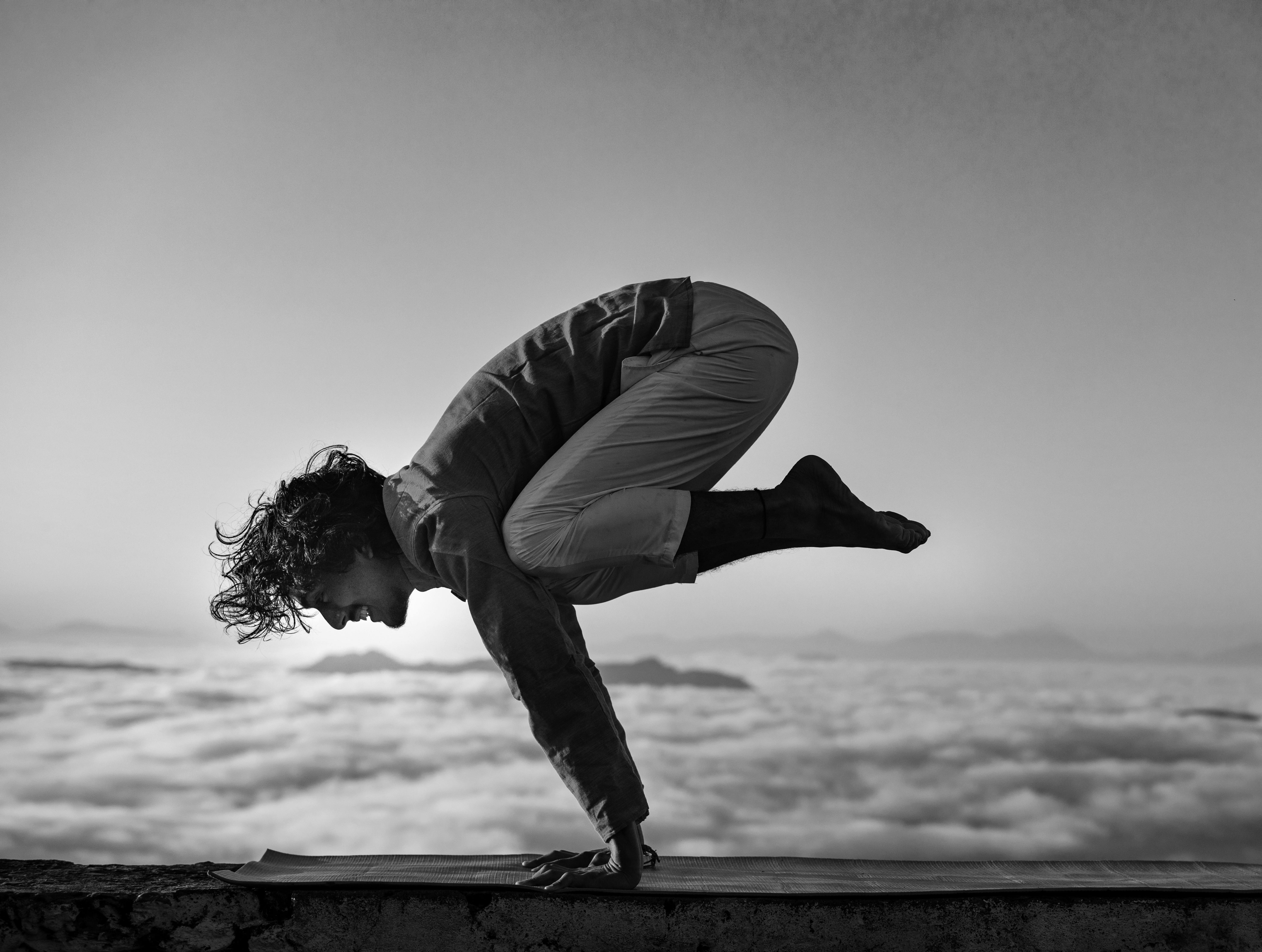
A yoga class can mean vigorous physical training, gentle supported stretching or almost entirely breath and stillness. The divergence has a traceable history rather than being a matter of branding.
The physical practice is more recent than assumed
Postural yoga as it is practised in classes today took its recognisable form during the twentieth century, drawing on older contemplative traditions alongside gymnastics and physical culture.
Older textual sources describe relatively few seated postures, with the emphasis falling on breath practice, ethical discipline and meditation.
Which means the vast repertoire of standing and balancing postures is largely a modern development, and that fact explains much of the variation that followed.
A small number of teachers produced most lineages
Several of the most widespread modern styles trace to the same influential teaching environment in southern India, transmitted onward by students who each emphasised different aspects.
One student developed a vigorous fixed sequence, another an alignment-focused approach using props, another a therapeutic style adapting practice to the individual.
The variation therefore reflects the pedagogical priorities of specific teachers rather than doctrinal disagreement about what yoga is.
Fixed sequences and open sequences solve different problems
A fixed series allows a practitioner to notice change in themselves, since the practice is constant and only the person varies.
An open sequence allows a teacher to respond to who is in the room, which suits mixed classes and students working around injury.
Neither is more authentic, and the choice mostly determines whether the constant in the room is the practice or the group.
Props changed who could practise
Blocks, straps and supports allow a posture's shape and intent to be reached by bodies that cannot achieve the unassisted version.
This shifted the emphasis from attaining a form to experiencing what the form is meant to produce, which is a substantive philosophical change presented as an equipment change.
It also made classes viable for older students and those recovering from injury, which broadened participation considerably.
Naming has become unreliable
Most style names are not protected, so the same word can describe quite different classes at different studios.
Teacher training lengths and content also vary widely, since the field has no single certifying authority with binding standards.
The practical consequence is that the teacher and the specific class matter more than the label, and anyone with a spinal condition, recent surgery or a joint problem should discuss it with the teacher beforehand rather than relying on the style name.